‘I Cannot Live with You’ by Emily Dickinson as a poet of ‘inwardness’ ‘I Cannot Live with You’ by Emily Dickinson as a poet of ‘inwardness’ Q. Emily Dickinson is often described as a poet of “inwardness”. How does sh…
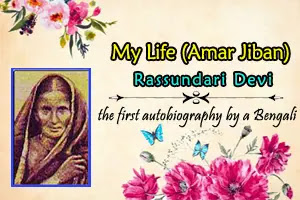
Rassundari Devi’s 'My Life (Amar Jiban)' as the first autobiography by a Bengali Rassundari Devi’s “My Life (Amar Jiban)” (The first autobiography by a Bengali) Q. Comment on the significance of Rassundari Devi’s “My Life (A…
Eunice De Souza's poem, ‘Bequest’: theme of loss, alienation, and isolation Eunice De Souza's poem, ‘Bequest’ (Theme of loss, alienation, and isolation) Q. In “Bequest” Eunice De Souza explores the loss, alienation,…
Wide Sargasso Sea by Jean Rhys: Role of Parent-Child Relationships Wide Sargasso Sea by Jean Rhys (Role of Parent-Child Relationships) Q. Consider the role of parent-child relationships in Wide Sargasso Sea. An…
A Vindication of the Rights of Woman: subversion of traditional gender norms A Vindication of the Rights of Woman by Mary Wollstonecraft (Subversion of traditional gender norms) Q. How does Mary Wollstonecraft subvert tr…
Gitanjali by Rabindranath Tagore: Distinction of spirituality from dogma Gitanjali: Rabindranath Tagore (Distinction of spirituality from dogma) Q. How does Tagore distinguish spirituality from dogma? Answer with refer…
Sharat Chandra’s novel, ‘Mahesh’: Exploitations and Inequities prevalent in Indian society Mahesh: Sharat Chandra Chattopadhyay (Exploitations and Inequities prevalent in Indian society) Q. How does Sharat Chandra’s ‘Mahesh’ expose the …